

Advanced Therapy Medicinal Products Don’t Fail for Scientific Reasons
- FRESCI TEAM
- Jan 16
- 3 min read

Updated: Jan 17
Most advanced therapy projects do not fail because the science is weak.
They fail because uncertainty is underestimated, decisions are postponed, and evidence is generated without a clear strategic purpose.
Advanced Therapy Medicinal Products (ATMPs) (from gene and cell therapies to tissue-engineered products) have changed what is scientifically possible. But translating that potential into approved, accessible therapies remains one of the most complex challenges in modern medicine.
Innovation, in this field, is not about speed. It is about direction.
The Real Bottleneck in ATMP Development Strategy
Advanced therapies sit at the intersection of multiple sources of complexity: novel mechanisms of action, small patient populations, evolving regulatory frameworks, and high expectations from healthcare systems.
Yet many development programmes still follow linear models that were never designed for this level of uncertainty.
Typical failure points include:
Regulatory assumptions made too late, or not revisited as science evolves.
Evidence strategies focused on data volume rather than decision relevance.
Development plans that ignore real-world feasibility until it is too late to correct the course.
When uncertainty accumulates unchecked, even strong science struggles to survive.
ATMP Development Is a Decision-Making Problem
At its core, advanced therapy development is not a scientific exercise. It is a decision-making process under conditions of limited information.
Every key step—classification, non-clinical strategy, first-in-human design, manufacturing scale-up—requires decisions that shape what is possible later on. Once taken, many of these decisions are difficult or impossible to reverse.
This is where experience matters.
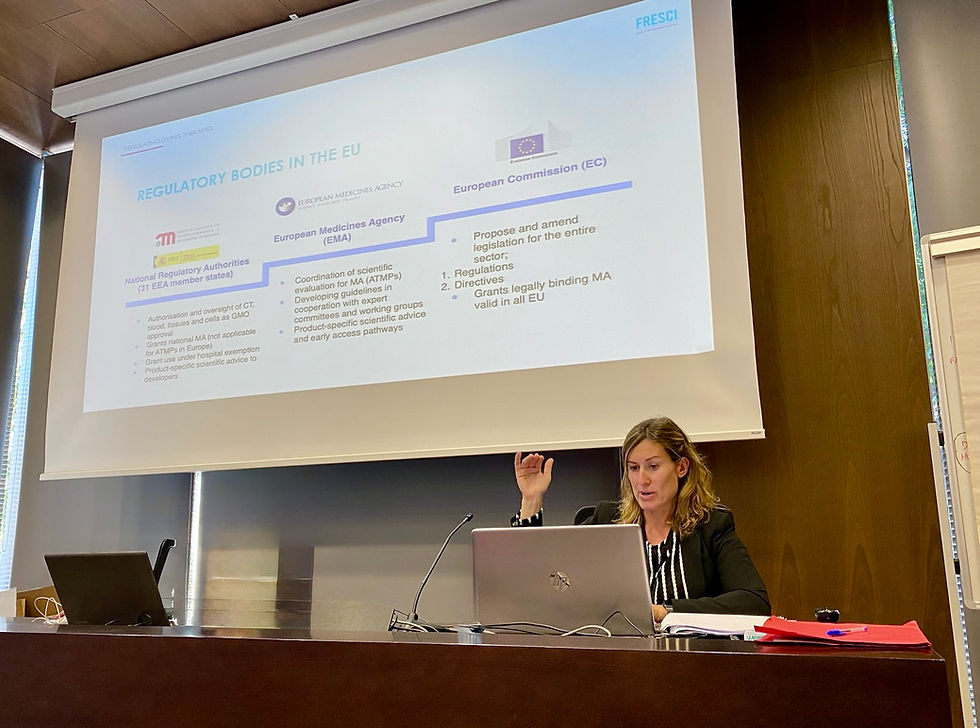
At FRESCI, we focus on supporting the decisions that determine whether innovation progresses or stalls. Not by removing uncertainty (because that is impossible) but by structuring it, anticipating regulatory expectations, and aligning evidence generation with what regulators and clinicians actually need.
Evidence Is Not Neutral
In advanced therapies, evidence is often treated as a technical output. In reality, it is a strategic choice.
What data you generate, when you generate it, and how it connects to regulatory and clinical questions can either accelerate development—or quietly block it.
FRESCI works with organisations to design evidence strategies that are:
Fit for purpose, rather than inherited from conventional drug models.
Scientifically robust, but also regulatorily meaningful.
Ethically grounded, integrating New Approach Methodologies (NAMs) where appropriate.
Good evidence does not answer every question. It answers the right ones at the right time.
Regulation Is Part of Innovation; Not Its Opposite
Regulation is often portrayed as the counterweight to innovation. In advanced therapies, this view is not only outdated: it is risky.
Regulatory frameworks for ATMPs continue to evolve, precisely because innovation is pushing their boundaries. Ignoring this dynamic, or engaging with regulators too late, increases uncertainty rather than reducing it.
A strategic regulatory approach allows:
Early identification of critical risks.
Alignment between development plans and regulatory expectations.
More efficient use of resources in programmes where margins for error are narrow.
At FRESCI, regulatory science is not a compliance exercise. It is a tool for shaping viable innovation pathways.
Data and AI: Useful Only When Applied with Intent
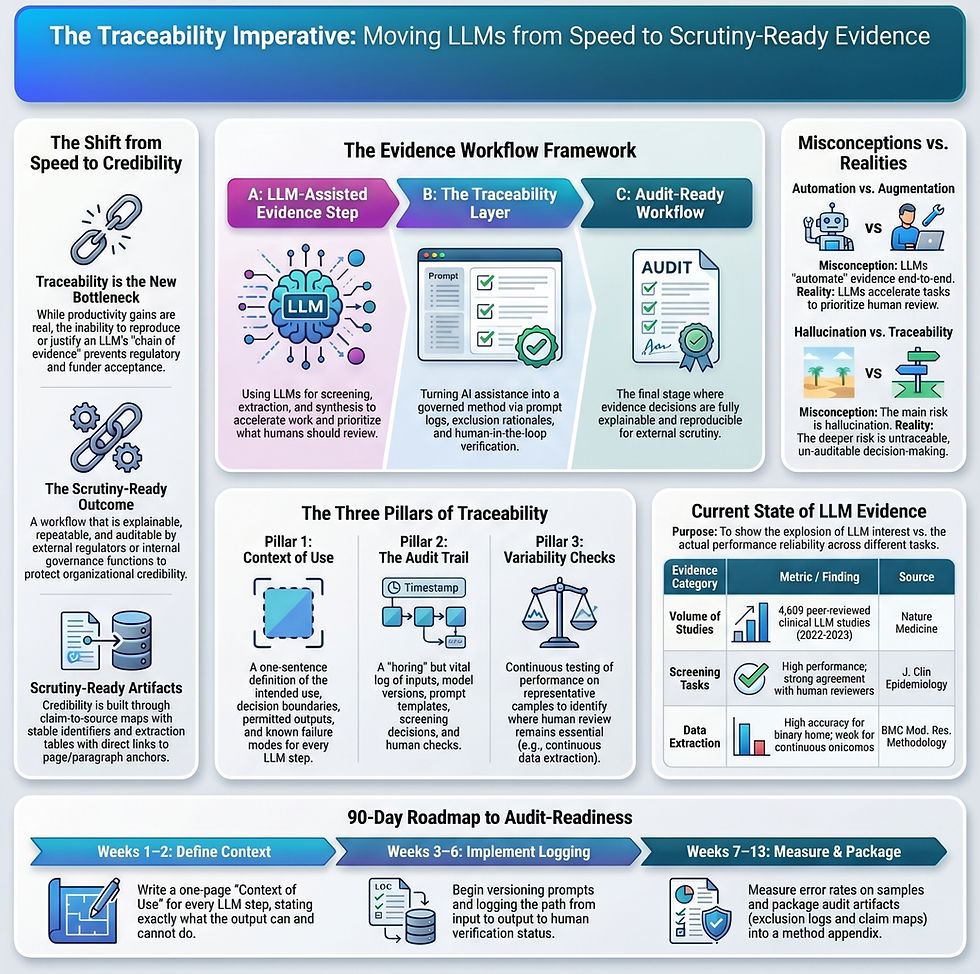
Advanced therapies generate complex scientific, regulatory, and clinical information. AI and data-driven tools can help, but only if they are applied with a clear purpose.
Used well, data intelligence supports:
Identification of evidence gaps before they become regulatory obstacles.
Anticipation of emerging trends and shifting expectations.
Strategic positioning in competitive and funding landscapes.
Used poorly, it simply adds noise.
The value lies not in automation, but in interpretation.

Innovation With Human Consequences
Advanced therapies are often discussed in terms of platforms, pipelines, and technologies. But their consequences are deeply human.
Every development decision affects patients waiting for options, clinicians balancing hope with safety, and healthcare systems managing sustainability.
Responsible innovation means recognising that speed, novelty, and impact must be balanced, not traded off blindly.
This is the perspective that guides FRESCI’s work.
Looking Forward
The next generation of advanced therapies will not be defined by breakthroughs alone, but by how effectively complexity is managed.
FRESCI helps organisations that succeed will be those that treat regulation, evidence, and strategy as interconnected (not sequential) elements of innovation.
Advanced therapies do not need more enthusiasm.
They need clearer thinking.


Comments